Stuck on Repeat: Why Millions of Americans Have Stopped Exploring and Started Rewatching
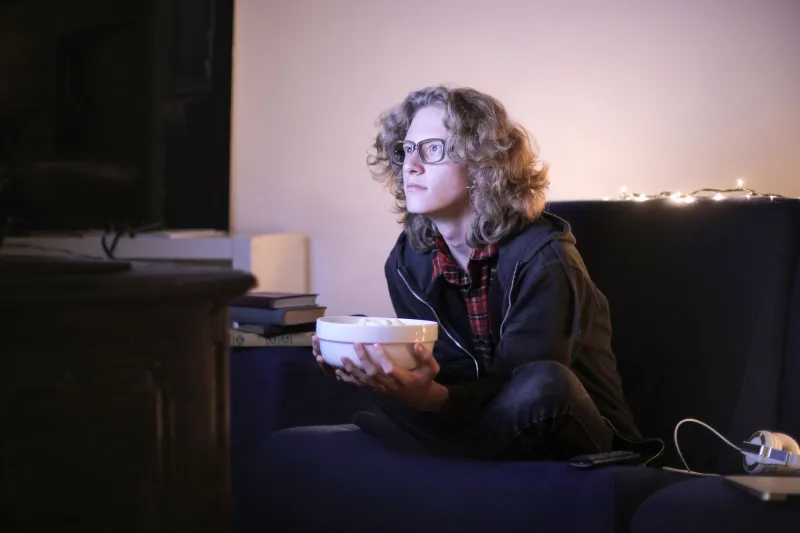
Somewhere between your fourth scroll through Netflix and your third abandoned pilot episode of a show you'll never finish, something broke. Not the streaming service. Not the remote. You. Or at least, your appetite for anything new.
Across the country, a quietly massive behavioral shift is happening in living rooms, bedrooms, and dorm apartments. Americans — in staggering numbers — have stopped seeking out new shows and started cycling back through the same comfortable rotations they've already watched. The Office for the eighth time. Friends again. That one season of Schitt's Creek you rewatch every winter like it's a religious ritual. Whatever your comfort show is, odds are you've returned to it more than once in the last year alone.
This isn't just a quirky habit. It's a full-on cultural pattern — and it's reshaping the entertainment landscape in ways that most people haven't fully reckoned with.
The Paradox of Too Much Choice
Here's the irony: we have more content available to us right now than at any other point in human history. HBO Max, Netflix, Peacock, Hulu, Apple TV+, Prime Video — the libraries are enormous, the output relentless. Studios greenlight hundreds of originals a year. There are more prestige dramas, quirky comedies, and limited series than any one person could realistically get through in a lifetime.
And yet — people are watching Frasier reruns.
Psychologists have a name for what's happening: decision fatigue. When the number of options in front of you exceeds your brain's comfortable processing capacity, it stops trying to optimize and starts retreating. You don't pick the best thing. You pick the safe thing. And for entertainment, "safe" almost always means something you already know you like.
This is compounded by what researchers sometimes call the "commitment problem" of modern TV. Starting a new show isn't a casual act anymore. It's a contract. You're potentially signing up for five seasons, a complicated mythology, an ensemble cast you'll need to track, and the emotional investment that comes with actually caring about fictional people. When you're already tired — from work, from the news, from just existing in 2024 — that contract feels exhausting before you've even hit play.
The Comfort Loop Is Real — And It Feels Good
Rewatching familiar shows isn't just laziness. There's genuine psychological comfort in it, and that's worth taking seriously. When you already know what's going to happen, your brain relaxes in a specific way it can't when you're processing new information. The suspense is gone. The narrative uncertainty is gone. What's left is just warmth — the pleasure of spending time with characters who feel like old friends.
Think about why people reread books or rewatch movies during stressful periods. It's not because they forgot the ending. It's because the known ending is the point. Predictability, in an unpredictable world, is its own kind of luxury.
For a lot of Americans right now, the world outside feels chaotic enough. The idea of coming home and introducing more uncertainty — even fictional uncertainty — into the evening is genuinely unappealing. Your comfort show rotation is, in a weird way, a coping mechanism.
What This Means for New Shows Trying to Break Through
Here's where things get tricky for the entertainment industry.
If a growing chunk of the audience is locked into rewatch loops, that's a serious problem for new creators trying to find viewers. A debut series doesn't just have to compete with every other new show — it has to compete with the psychological gravity of shows people already love. That's an almost unfair fight.
Streaming platforms have noticed. Part of why recommendation algorithms keep surfacing familiar content — or content that closely resembles things you've already watched — is because they've figured out that novelty doesn't always convert. Comfort does. So the algorithm nudges you toward the comfortable, and the comfortable nudges you away from the genuinely new.
The result is a kind of entertainment stagnation at scale. New voices, new formats, new perspectives — they're all fighting for attention from an audience that has been quietly trained to not take risks. A brilliant debut series can get buried not because it's bad, but because it asks too much of an already-fatigued viewer.
Word of mouth used to be the great equalizer. A truly special show would spread through conversations, group chats, and office water coolers until it couldn't be ignored. But that mechanism assumes people are actually watching new things to talk about. When everyone's on their own private rewatch loop, the word of mouth chain breaks before it starts.
The Shows That Survive This — And Why
Not every new show gets swallowed by the rewatch phenomenon. Some break through, and it's worth looking at how.
Shows that become cultural events — the kind that generate unavoidable conversation — can still drag reluctant viewers out of their comfort zones. The Last of Us, The Bear, Succession in its final season: these became appointment viewing not just because they were good, but because opting out felt like missing something real. The social cost of ignorance exceeded the psychological cost of commitment.
There's also the slow burn phenomenon, where a show quietly accumulates a devoted audience over time rather than demanding immediate attention. Some viewers are willing to give something a chance when they feel like the decision is low-stakes — a single episode, no pressure, we'll see. The shows that succeed at this tend to have very strong pilots and very low barriers to entry.
But both of these paths are narrow. Most new content doesn't get to be a cultural event, and most creators don't have the luxury of a slow-build audience development strategy when platform algorithms are making cancellation decisions after two weeks of data.
Is There a Way Out of the Loop?
Probably not a clean one. The conditions that created the rewatch era — overwhelming content libraries, decision fatigue, a general cultural exhaustion — aren't going away. If anything, they're deepening.
What might help, at least at the margins, is a shift in how we think about our own viewing habits. Being intentional about it. Deliberately scheduling time to try something unfamiliar, the way you might make yourself try a new restaurant instead of defaulting to the same order. Treating the discovery of a genuinely great new show as worth the initial discomfort of not knowing what you're getting into.
For platforms, it might mean rethinking how aggressively they push comfort content and building in genuine discovery features that reward exploration rather than just validating existing preferences.
For creators, it might just mean accepting that the first job of any new show is no longer to be good — it's to be undeniable. To be so immediately compelling that it cuts through the inertia of a million people who were perfectly happy watching The Office again tonight.
That's a high bar. But then again, so is getting someone to change the channel on something they already love.