Watching the Same Shows, Living in Different Worlds: How TV Lost Its Communal Magic
Watching the Same Shows, Different Worlds: How TV Lost Its Communal Magic
There's something genuinely strange happening in American living rooms right now. Pull up any streaming platform's trending row and you'll see the same handful of titles sitting at the top — a buzzy limited series, a reality competition comeback, a documentary everyone swears they're about to watch. The numbers are real. People are watching. But ask your coworker about it Monday morning, and you'll probably get a blank stare or a shrug. "Oh, I haven't gotten there yet." Or worse: "Wait, that's still on?"
Somehow, tens of millions of people are consuming the same content and still managing to miss each other entirely.
The Algorithm Gave You a Bubble and Called It Personalization
Streaming platforms have spent years perfecting the art of getting you to watch something — anything — without ever needing to coordinate with another human being. That's by design. The whole pitch of on-demand television was freedom: watch what you want, when you want, at whatever pace you want. Nobody's waiting for Thursday night anymore. Nobody has to.
But here's what that freedom quietly traded away. When you can watch episode six on a Tuesday afternoon and your friend watches episodes one through three on a Sunday binge two weeks later, you're technically watching the same show while living in completely different narrative timelines. You can't talk about it. One of you is always either ahead or behind, and the conversation gets buried under a mountain of spoiler anxiety.
The algorithm made it worse by learning your habits so well that even the path you take to a trending show looks different from everyone else's. You got there through a true crime recommendation. Your neighbor got there because it autoplayed after something else entirely. You're both watching, but you arrived from different directions and you'll leave at different times. There's no shared moment of discovery anymore.
The Water Cooler Didn't Die — It Got Complicated
Remember when "did you see it last night" was just a question and not a logistical negotiation? The old broadcast model had its problems — you either watched live or you missed out — but it created something genuinely valuable: synchronized cultural experience. Everyone watched the Friends finale on the same night. Everyone saw the Super Bowl halftime show at the same time. The communal reaction was part of the entertainment.
Today, even massive streaming events struggle to replicate that. A show can drop all at once and still generate a fragmented cultural conversation because different people binge at different speeds. The first-weekend crowd is already posting theories and reactions while half the audience hasn't even started. By the time the slower viewers finish, the discourse has moved on, the memes have aged out, and the hot takes have gone cold. The moment passed without them.
Award shows have started to feel this disconnect acutely. When the Emmys or Golden Globes roll around and a streaming series wins big, a huge chunk of the audience hasn't seen it. Not because they don't want to — but because the algorithm never surfaced it for them, or they're somewhere in the middle of it, or they watched the first episode six months ago and forgot to go back. The shared cultural vocabulary that awards ceremonies depend on has gotten thinner every year.
Memes Used to Be a Conversation — Now They're a Spoiler
Meme culture was supposed to be the great equalizer — the place where everyone processed pop culture together in real time. And for a while, it worked. A scene would air, Twitter would explode, and by the next morning you had a shared visual shorthand that the whole internet understood.
But when everyone's on a different episode, memes become landmines. The funniest reaction image from episode eight means nothing to someone on episode three — and actively ruins something for them. So people start self-policing. They hold back. They post vaguely. The joke loses its teeth because the communal context isn't there to support it.
TikTok tried to solve this with reaction content and "no spoiler" commentary, but it only kicked the problem down the road. You can watch someone react to a twist without knowing what the twist is, which is its own weird kind of fractured experience — like watching someone laugh at a joke you can't hear.
The Paradox Nobody Warned Us About
Here's the real irony at the center of all this: entertainment has never been more accessible, more abundant, or more technically impressive. The content is genuinely good — often great. Streaming platforms have funded some of the most ambitious television ever made. And yet the experience of being an entertainment fan has gotten lonelier.
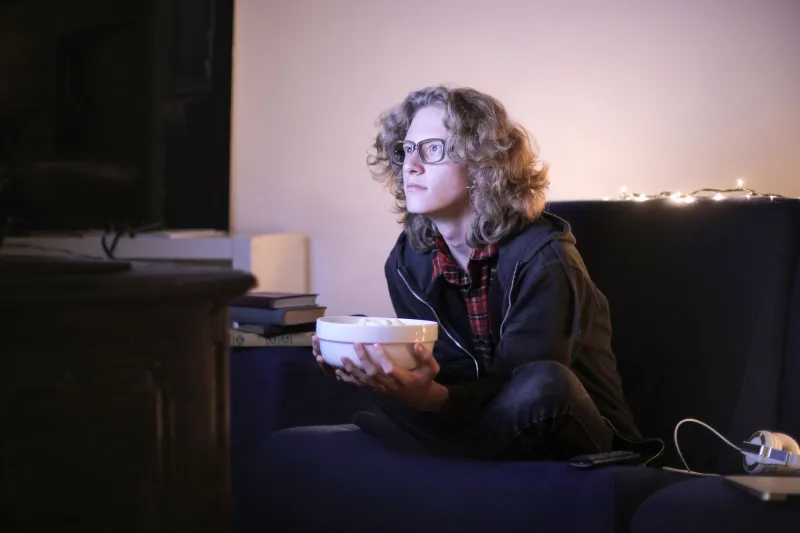
You can watch anything. You can watch it anytime. You can watch it alone, on your phone, in bed, at 2 a.m. — and millions of other people are doing the exact same thing at the exact same time in the exact same isolation. There's something almost poetic about it, in a sad way.
The platforms understand this on some level, which is why they occasionally try to manufacture the communal moment. Simultaneous drops. Live events. Countdown clocks. They want the buzz that comes from everyone watching together, but their entire infrastructure is built to make that unnecessary. You can't really have it both ways.
So What's Left of Shared Entertainment Culture?
Sports, honestly. Live sports remain one of the last genuinely synchronized mass entertainment experiences in America, which explains a lot about why leagues and networks are still printing money while scripted TV fragments. You cannot binge the Super Bowl. You cannot skip ahead. Everyone is watching the same fourth quarter at the same time, and the conversation is immediate and universal.
Live events — concerts, awards shows, major premieres — still carry some of that energy when they're not competing with an algorithm. And social platforms occasionally manufacture a genuine shared moment when something unexpected breaks through: a controversial finale, a celebrity meltdown, a plot twist so wild that even people who haven't watched the show are weighing in.
But those moments feel rarer now. More precious. More surprising when they happen.
The entertainment landscape isn't going back to Thursday nights and appointment television. That ship sailed and the algorithm bought it. But it's worth acknowledging what got lost in the trade — the simple pleasure of watching something at the same time as everyone else and having something to say about it the next morning. That used to be free. Turns out it was worth more than anyone realized.