Strangers, Snacks, and Season Finales: Why Americans Are Paying to Watch TV Together Again
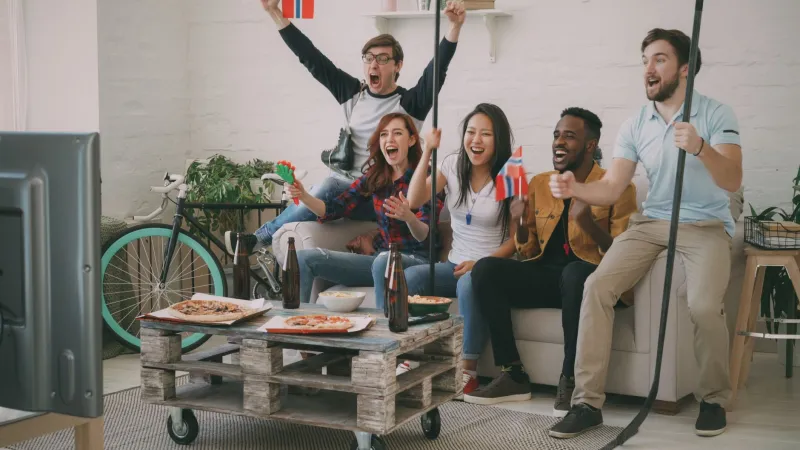
There's a particular kind of magic to hearing a bar full of strangers scream at a reality TV elimination in unison. It's chaotic, it's loud, and apparently, it's the future of American television fandom.
Across the country, the watch party has roared back to life. Bars in Chicago are packing in crowds for Survivor nights. Public libraries in small-town Ohio are hosting weekly screenings of cozy British mysteries, complete with tea and biscuits. Movie theaters — yes, theaters — are selling tickets to season premieres of streaming shows, and people are showing up in costume. After roughly ten years of everyone binge-watching alone in the dark, Americans have decided they'd rather watch TV with a hundred people they've never met.
The question is why. The answer says a lot about where entertainment — and honestly, where all of us — is headed.
The Solo Binge Era Ran Out of Gas
For most of the 2010s, the entire promise of streaming was isolation. Watch what you want, when you want, at whatever pace you want. No appointments, no spoilers, no negotiating with a household over the remote. It was convenient, and it was also quietly lonely.
Then something shifted. The pandemic made solo viewing the only option, and when the world reopened, a strange thing happened: people didn't go right back to their couches. They'd gotten a taste of what life was like without shared experiences, and a lot of them didn't love the flavor.
Enter the watch party. Not the kind where three friends crowd around a laptop, but organized, ticketed, sometimes catered events built around a single episode of television. A screening of a reality show finale at a brewpub. A Golden Bachelor night at a wine bar with themed cocktails. A library hosting a Ted Lasso marathon on a Tuesday evening because, as one librarian put it, "people just wanted to be in a room together."
Why Strangers Make TV Better
Ask anyone who's attended one of these events and they'll tell you the same thing: the show is only half the reason they're there.
There's a scientific-ish way to put this — emotions are contagious, and laughter genuinely is louder in a crowd. But the real appeal is simpler. Watching with strangers gives you permission to react fully. You can gasp, boo the villain, cheer the underdog, and nobody in your living room is asking you to keep it down because someone's sleeping.
It also recreates something TV lost decades ago. Remember the water cooler? The Monday-morning recap with coworkers about last night's Sopranos or Lost episode? That culture mostly died when on-demand viewing scattered everyone onto different timelines. Watch parties slam it all back into one room. Everyone is on the same episode at the same moment. Spoiler anxiety: zero.
And there's a bonus nobody planned: friendship. Attendees at recurring screening nights report group texts forming, watch-along squads emerging, and regulars saving seats for each other. In an era where the surgeon general has flagged loneliness as a public health crisis, a $10 ticket to yell at a screen with forty new acquaintances starts to look like a bargain.
The Business of Watching Together
Of course, this being America, it didn't take long for someone to figure out how to monetize it.
Bars were the early adopters — a watch night is basically a themed trivia night with better ratings. But theaters got in on it too, and they've found that premiere events sell. Fans show up dressed as their favorite characters, theaters lean into the spectacle with themed concessions, and suddenly a streaming show has the energy of a midnight Rocky Horror screening.
Streaming platforms, for their part, have noticed. Some have quietly started licensing premiere-night screenings and leaning into event-style releases. The industry spent a decade teaching us that TV was a private experience; now it's discovering that communal viewing might be the best marketing there is.
What This Says About Us
Strip away the themed cocktails and the costumes, and the watch party revival is really about a simple correction. Entertainment got very good at delivering content directly to individuals and very bad at giving people reasons to share it. The pendulum is swinging back.
None of this means the solo binge is dead. People will absolutely still mainline a new series at 1 a.m. in their pajamas — some shows demand it. But the rise of ticketed, in-person viewing events suggests that watching TV was never really about the TV. It was about having something to react to, and someone to react with.
So the next time your local bar announces a finale night, consider going. You'll yell at a screen, you'll high-five a stranger, and you'll remember why everyone's grandparents talked about last night's episode like it was breaking news.
Because it was. It just took us a decade to want that feeling back.